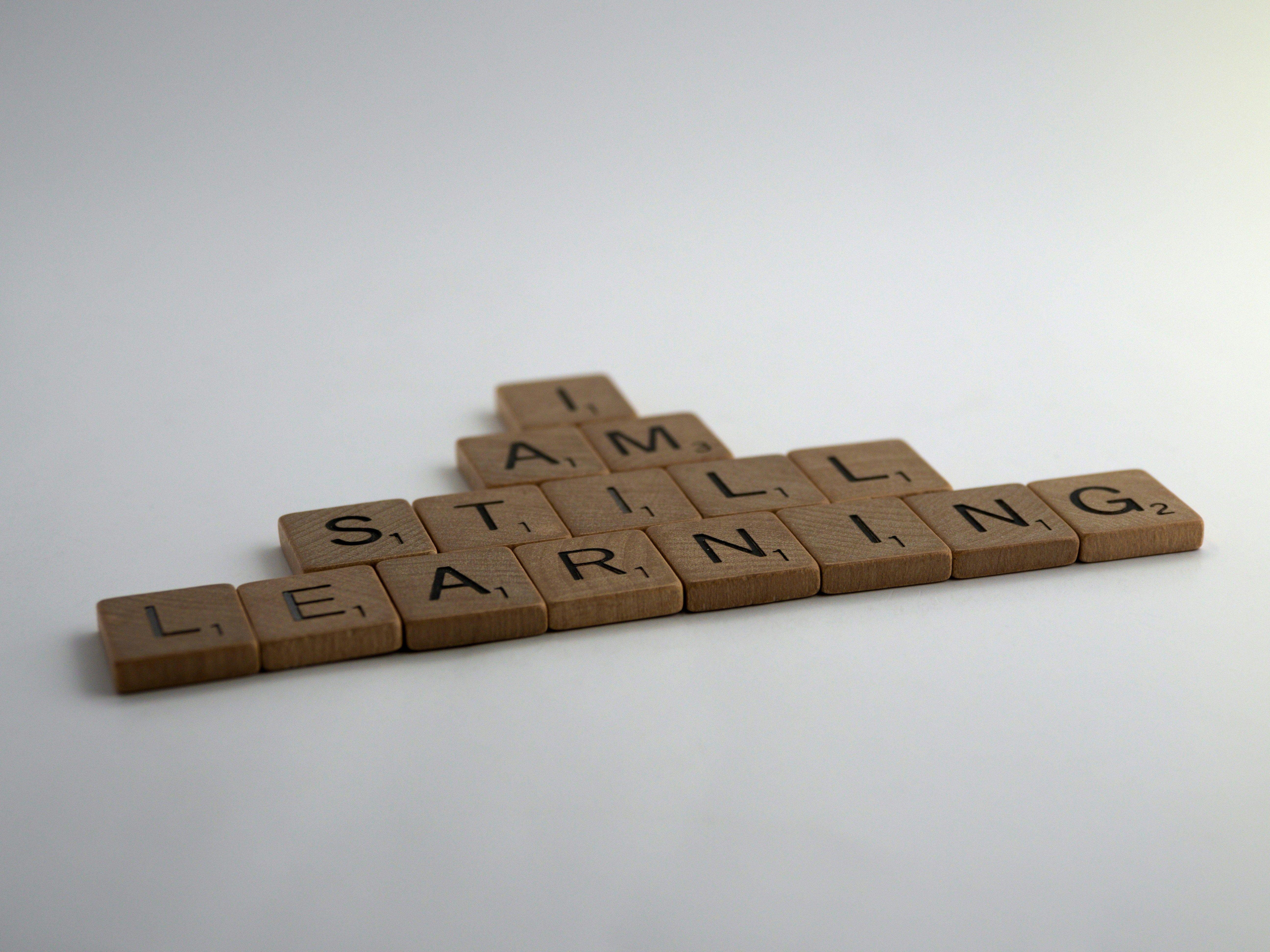
Two scenes from my working life.
The first is from 1997, when I was an apprentice draughtsman. I was handed a stack of paper blueprints almost half a metre high and told to file them alphabetically into archive boxes on a floor-to-ceiling shelf. It took me nearly a week and remains one of the most pointless things I have ever done.
The second is from 2009, when I joined a small SAP CRM consultancy as an associate consultant. A senior colleague dropped the famous ABAP Objects book on my desk, all 1,059 pages of it, with one piece of advice: “You should learn this to prepare for the project.” So I taught myself ABAP from the book and a bit of Google. It was slow, tedious and highly inefficient, and my first programs on my first customer project were a journey of trial and error.
The burden of beginners
Both experiences show that starting out in a job has never been easy. And it may get harder still if AI replaces junior roles altogether. That, at least, is what many articles predict, and early labour market data points in the same direction. So what does this mean for young people trying to land their first job in the corporate world? Are the doors locked, with the seniors holding the keys?
This question came up as I reflected on my own learning journey in my last article. I am lucky to have more than 15 years of experience on my CV, which will hopefully keep me employed in IT. But what if the AI revolution had happened 20 years ago, when I decided to study business informatics? What if I had worked through my degree without knowing whether the knowledge would still be worth anything by graduation? What if everyone had told me that AI would make experts obsolete? The fear and frustration would have been immense.
The concern is real, and I will come back to the numbers. But I do not think the picture is as dark as it is often painted. Many of the loudest predictions come from the AI industry itself, which has every reason to stress how powerful its products are. And my own start shows that the old way into a career was far from ideal.
There is no perfect preparation
My story about entering the consulting business needs a little more context. I never planned to work in software development, and SAP played no part in my studies. I leaned towards the business side of business informatics and pictured myself at one of the big strategy consultancies. Then the financial crisis of 2008 hit, and junior roles at those firms all but disappeared. So I gave the unknown a chance: after an internship at a small SAP consultancy, I joined it as an associate consultant.
Very little of what I had learned at university was of use in my new job. I had a degree, but no practical experience and no relevant background. In that respect, my situation was not so different from that of graduates today. My knowledge had not been made obsolete by a technological disruption. It was simply the wrong knowledge for the job in front of me.
So I started from scratch, and not very efficiently. I wandered into the unknown territory of the SAP world with little support beyond the occasional answer from a senior colleague. There was no formal training and no structured learning material for my daily work. My tasks were small, my progress was slow, and I added little business value to the company. In short, I was exactly the kind of junior that AI is now said to replace.
A quick start with better equipment
The good news is that we will not miss that kind of starter job. What we need is a new kind of newcomer. People at the start of their careers should not see AI tools and agents as a threat to their assistant jobs, but as powerful equipment that lets them add real business value from day one. The knowledge I once picked up so inefficiently from a thick, dull book can now be acquired through online courses, demo systems and AI coding agents that document and explain their own work.
AI tools such as Claude do not just deliver a solution. They also explain how to get there, and that is a game changer for learning any new skill. Newcomers stand to gain the most. A study of more than 5,000 customer support agents found that an AI assistant raised the productivity of novices by around a third, while experienced agents gained little. Seniors already bring years of context they can sell on the market. Newcomers lack that context, which is why they lagged behind for so long. That does not have to be the case in the future.
But my two scenes are not the same kind of story. Nobody will mourn a week of filing blueprints. My slow struggle with ABAP, however, was where my understanding grew. If AI takes over both, we lose the waste and the learning at once. So the real question is how to keep one without the other.
Where juniors grow
So where will tomorrow’s juniors gain the understanding that used to come with the craft? Research on learning with AI gives a surprisingly clear answer, precisely because two studies seem to contradict each other.
At Harvard, physics students who worked with a purpose-built AI tutor learned more than twice as much as students in a well-taught active-learning class, and in less time (Kestin et al., 2025). The tutor did not hand out answers. It asked questions. A field experiment with almost a thousand secondary school students points the other way (Bastani et al., 2025). With a standard GPT-4 chat, they performed much better on practice problems. Once access was taken away, however, they did 17% worse than students who had never used it. They had used the AI as a crutch, and they overestimated how much they had learned.
The technology was the same. What differed was whether it made people think or did the thinking for them. Nobody has to put their brain on the shelf, just as nobody is forced to stay away from the gym. So the question is not whether juniors use AI, but where and how they learn with it. I see three places.
The role of universities
Universities lay the foundation. My own degree did not prepare me for the SAP world, and in hindsight it did not have to. Its job is to build what I called a Home Town in my last article: how companies work, how money, goods and data flow, how to judge a source and how to learn. The temptation is to teach tomorrow’s craft instead. SAP, for example, now gives students trial access to build AI agents with Joule Studio. That is useful, but tool knowledge ages as quickly as the transaction codes I once memorised. More promising are new exam formats in which students may use AI and are tested on what remains: their judgement.
The role of companies
Companies pass on what no textbook holds. According to Stanford’s Digital Economy Lab, AI mainly replaces codified textbook knowledge, not the tacit knowledge that builds up with experience. That kind of knowledge only grows in real work, so no university can relieve employers of this responsibility. The numbers are sobering: employment of 22- to 25-year-olds in the most AI-exposed occupations is now 19% below that of their peers. Yet the same research shows that where AI augments work rather than automates it, early-career employment is growing. It all depends on how companies design the junior role. Those who let AI replace juniors save money today and will run short of seniors in ten years. Those who let AI amplify them gain people who are productive early and still learn.
The role of the individual
Self-directed learning connects the two, for an entire career. My ABAP book was self-directed learning in its purest form, and it barely worked, because nobody asked me questions or caught my mistakes. A good AI tutor can fill exactly that gap. A poorly used one simply replaces the book and takes away the effort we learn from.
Self-directed learning has the greatest potential of the three. But it needs a foundation, guardrails, and people who check whether we have really understood. We can no longer expect schools and universities to hand us a complete learning path, and each of us has to take more responsibility for our own development. The idea that a degree prepares you for a lifelong career was questionable even in the past. Today it is clearly outdated.
And the tools are cheap. Much of humanity’s written knowledge now sits in powerful language models, available to anyone willing to pay little more each month than a Netflix subscription. Add specialised learning tools, demo systems and countless opportunities to experiment, and the barrier to learning has never been lower.
Putting it together
Taken together, this suggests a division of labour:
| Where | What is learned here | Where it can fail |
|---|---|---|
| University | The foundation: how companies work, tools for thinking, learning itself | Teaching tool knowledge instead of fundamentals |
| Company | Tacit knowledge, context, the why behind decisions | Replacing juniors instead of amplifying them |
| Self-directed learning | Connecting the two, throughout a career | Using AI as a crutch instead of a sparring partner |
Juniors grow where all three come together. None of them can do it alone.
So the doors are not locked. But they no longer open on their own, and seniors like me have a part to play in holding them open. If I started again today, I would not get a book on my desk. I would hope for a colleague who asks me why, and an AI that makes me think before it answers.
In my next article, I will turn from people to systems. If the knowledge in our core systems is to move into the AI age, what will the enterprise landscape around it look like? I will sketch its components and how they fit together.
A note on how this was written: the ideas, experiences and opinions in this article are my own, and so is every decision about what stays and what goes. I use AI as a sparring partner to challenge my drafts and sharpen the wording. That seems only fitting for a blog about humans and AI working together.